Watertight
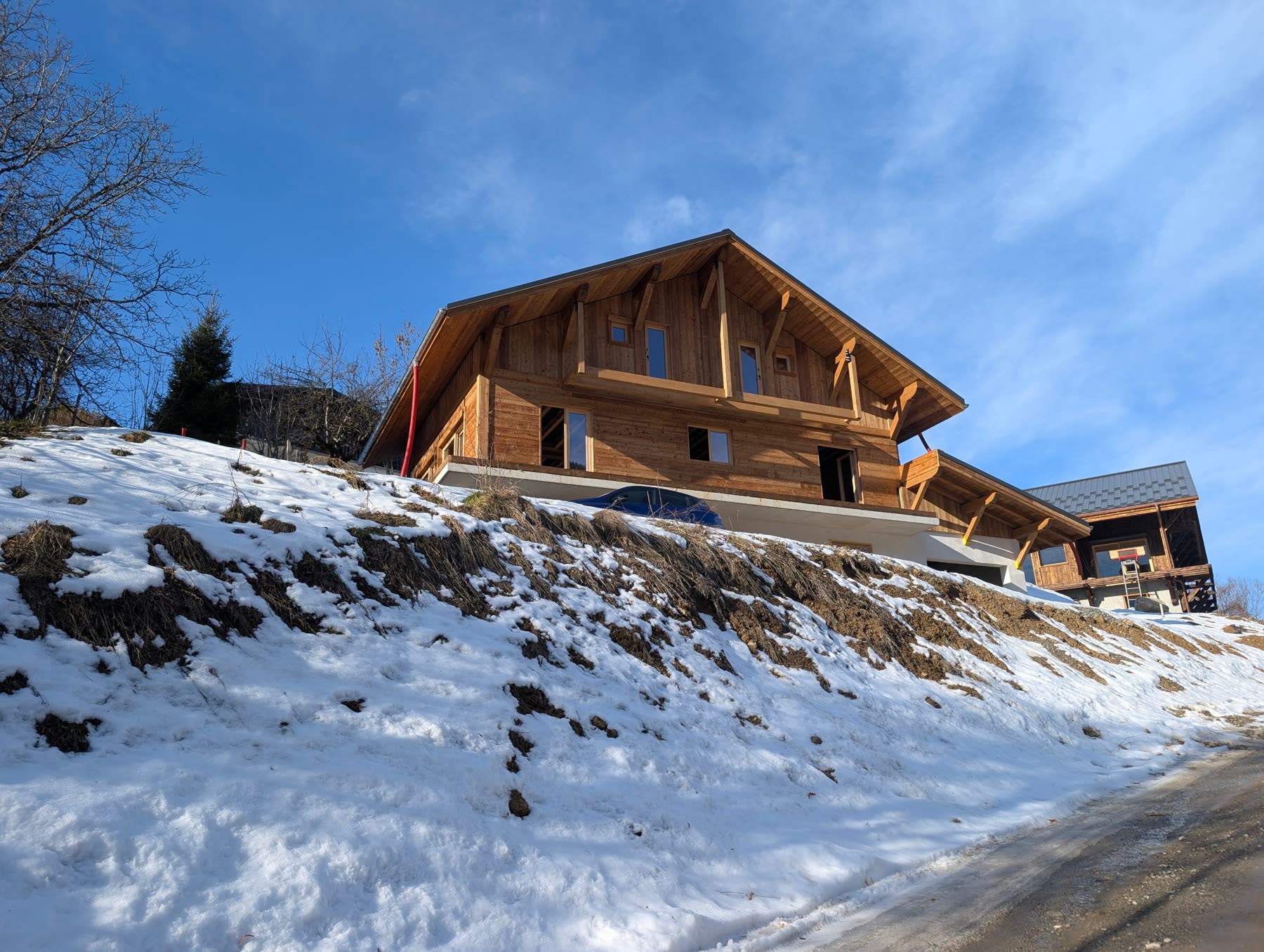
Eight months after the first digger arrived, the chalet could finally face a mountain winter on its own.
By Marc 2 min read
Progress!
In April 2025 the first digger arrived at a hole in the hillside. By the end of the year, there was a chalet there that could look after itself through a mountain winter.
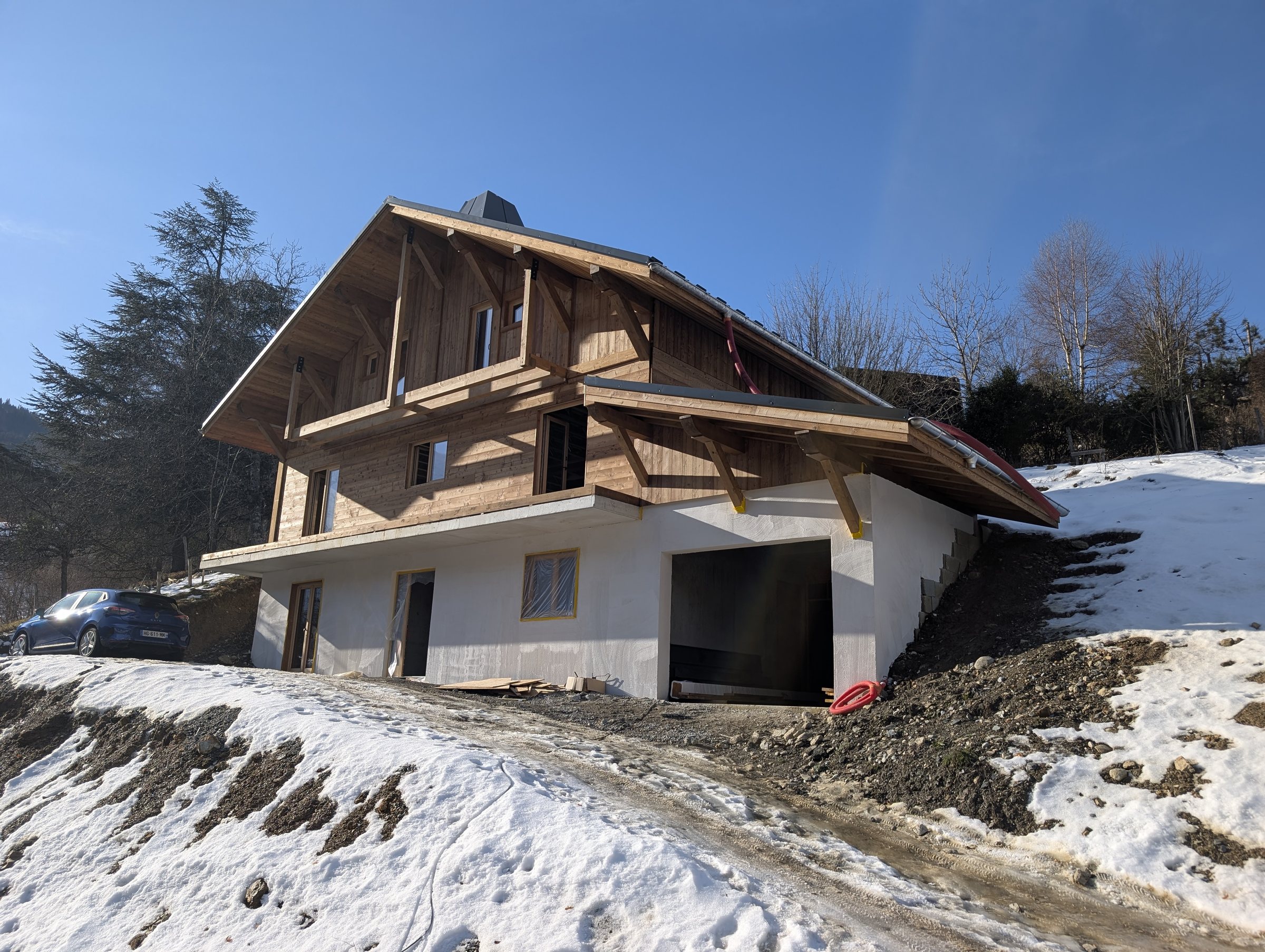
That’s what “watertight” means on a building site, and it’s the moment every self-builder waits for. The roof is on, the windows and doors are in, and the walls are clad. Rain and snow stay outside. Inside, the work can carry on whatever the weather does.
It was a big milestone for us. Phase one was done.
How we got there
Looking back, 2025 went roughly like this:
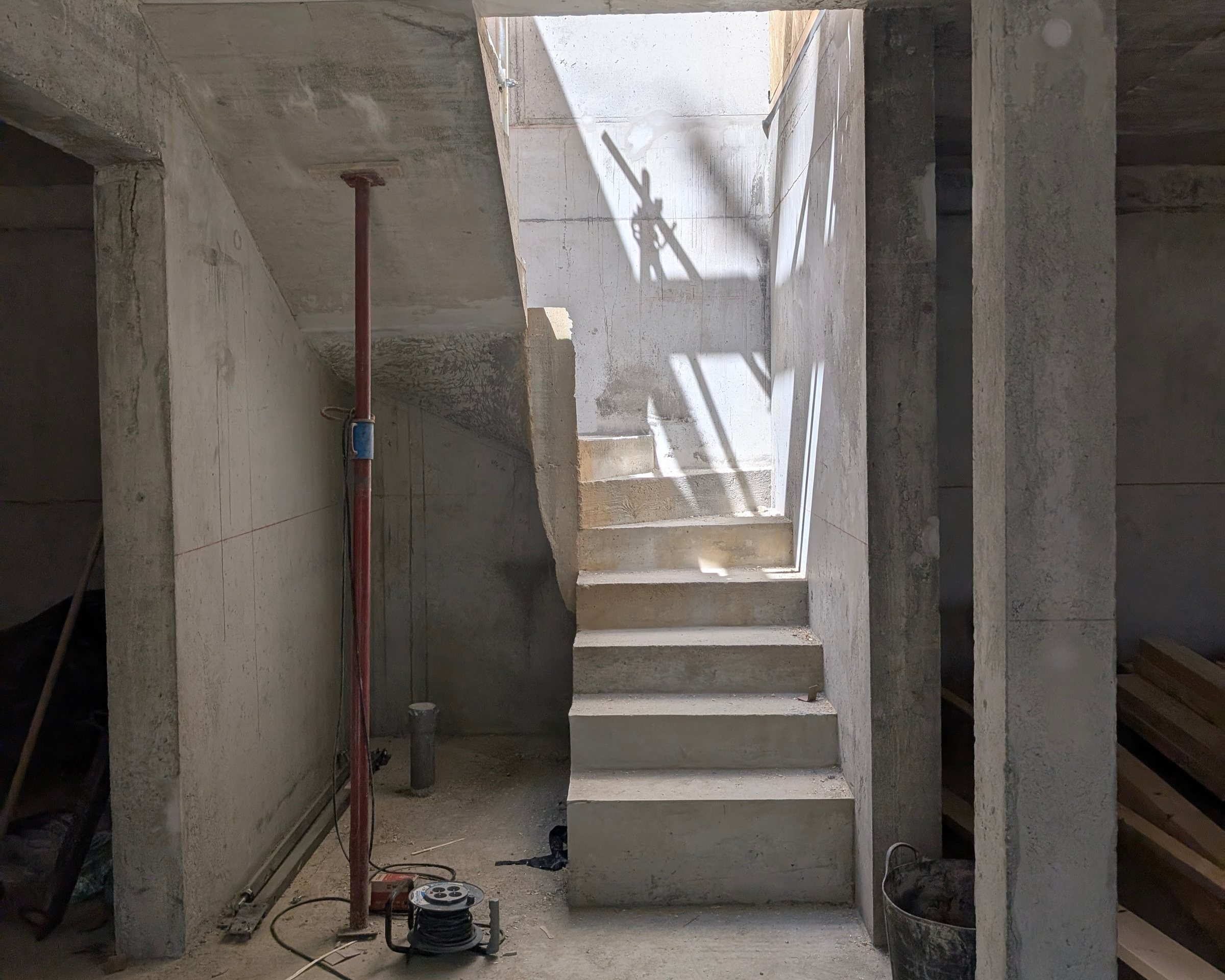
- April: the machines arrive. Groundworks, then the concrete ground floor set into the slope.
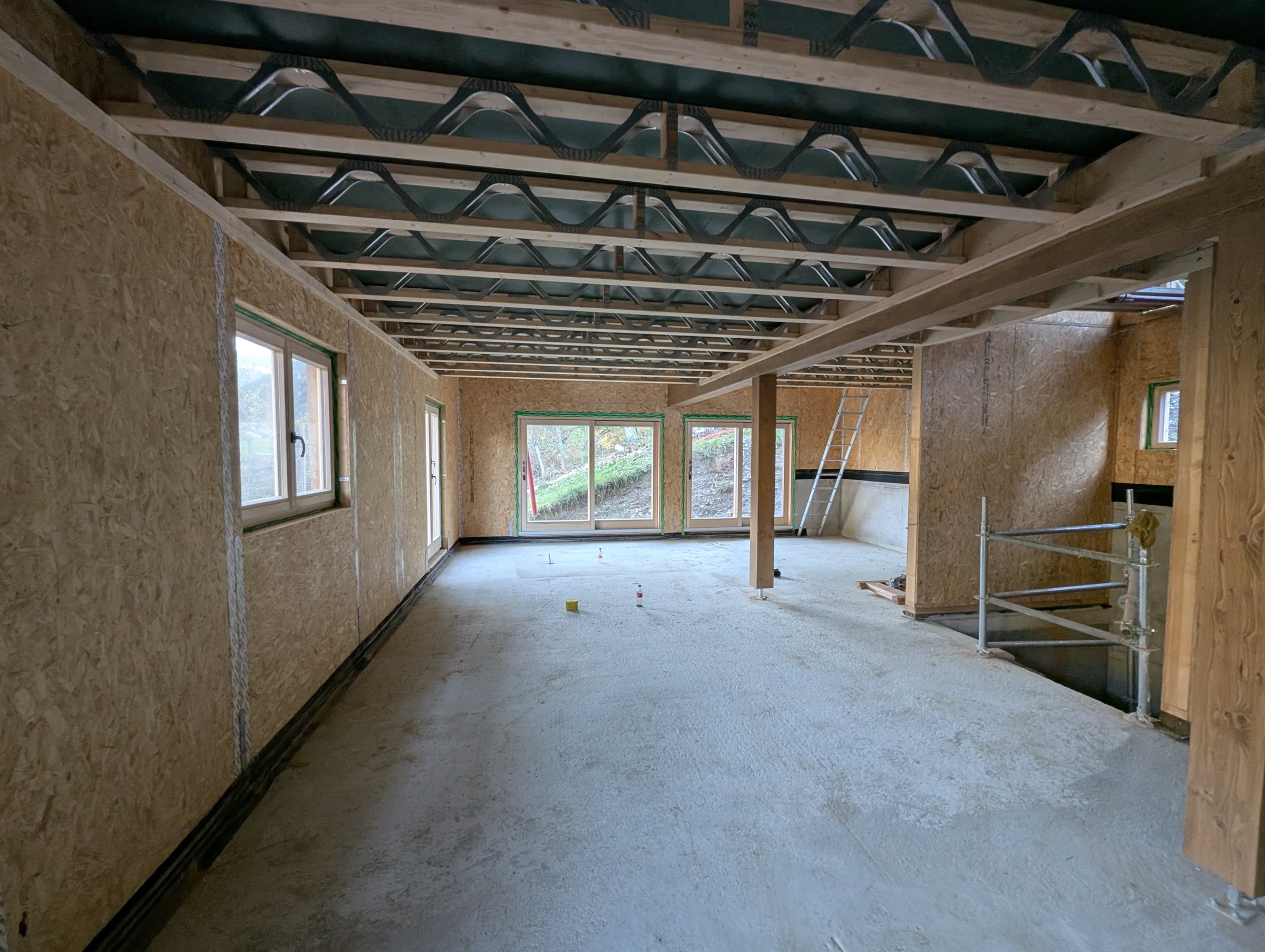
- June: the SIP panels go up, and the shell stands in under two weeks.
- Summer: the windows are ordered (they take about ten weeks to make), the roof goes on, and the larch cladding and soffits follow.
- Autumn: the garage gets its own pitched roof, and the windows and doors are fitted.
- End of the year: watertight.
No single moment made it watertight. It was the last of a lot of small ones: the final flashing folded over the ridge, the last window sealed into its frame, the last larch board on the wall.
What watertight doesn’t mean
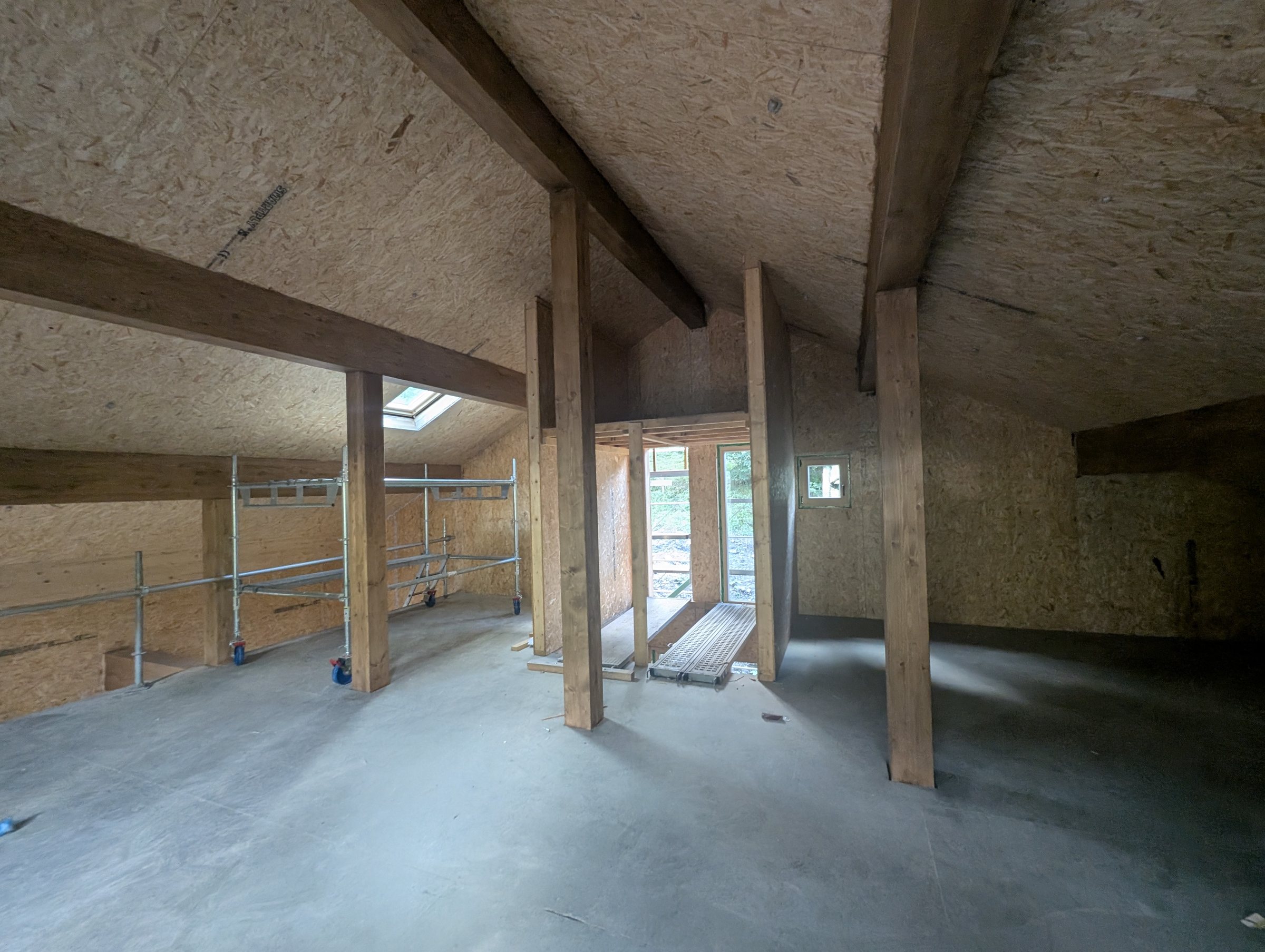
It’s worth being honest about this, because it’s easy to look at the photos and think we’re nearly there. We weren’t. Watertight means the outside is finished. The inside was still a shell: no walls, bare panels and concrete, waiting for everything that makes it somewhere to live.
In a build like ours, that’s roughly the halfway point. The second half is slower, fiddlier, and where most budgets come unstuck.
What comes next
Six months of intense activity and then a lull. With the outside sealed, the work moved indoors, and so did the project management. The new year brought phase two: underfloor heating, air conditioning, lime-plaster walls, two kitchens, the bunk room, the cinema room, and all the small decisions that turn a shell into a chalet a family wants to come back to.
That’s the next part of the story.
A little context
What does watertight mean in building?
A building is watertight once the roof, windows, doors and outer walls are finished, so rain and snow can’t get in. Work can then move inside whatever the weather.
How long does it take to get a chalet watertight in the Alps?
Ours took about eight months, from the first groundworks in April 2025 to watertight at the end of the year. The SIP shell itself took under two weeks; the groundworks, roof, windows and cladding took the rest.
Is watertight halfway through a build?
Roughly, in our experience. The outside is done, but the fit-out (heating, plumbing, electrics, floors, kitchens and finishes) is slower and has far more decisions in it.
Why does getting watertight before winter matter in the Alps?
Once snow arrives, outside work slows or stops. Being sealed by winter means the inside trades can keep working through the cold months instead of waiting for spring.