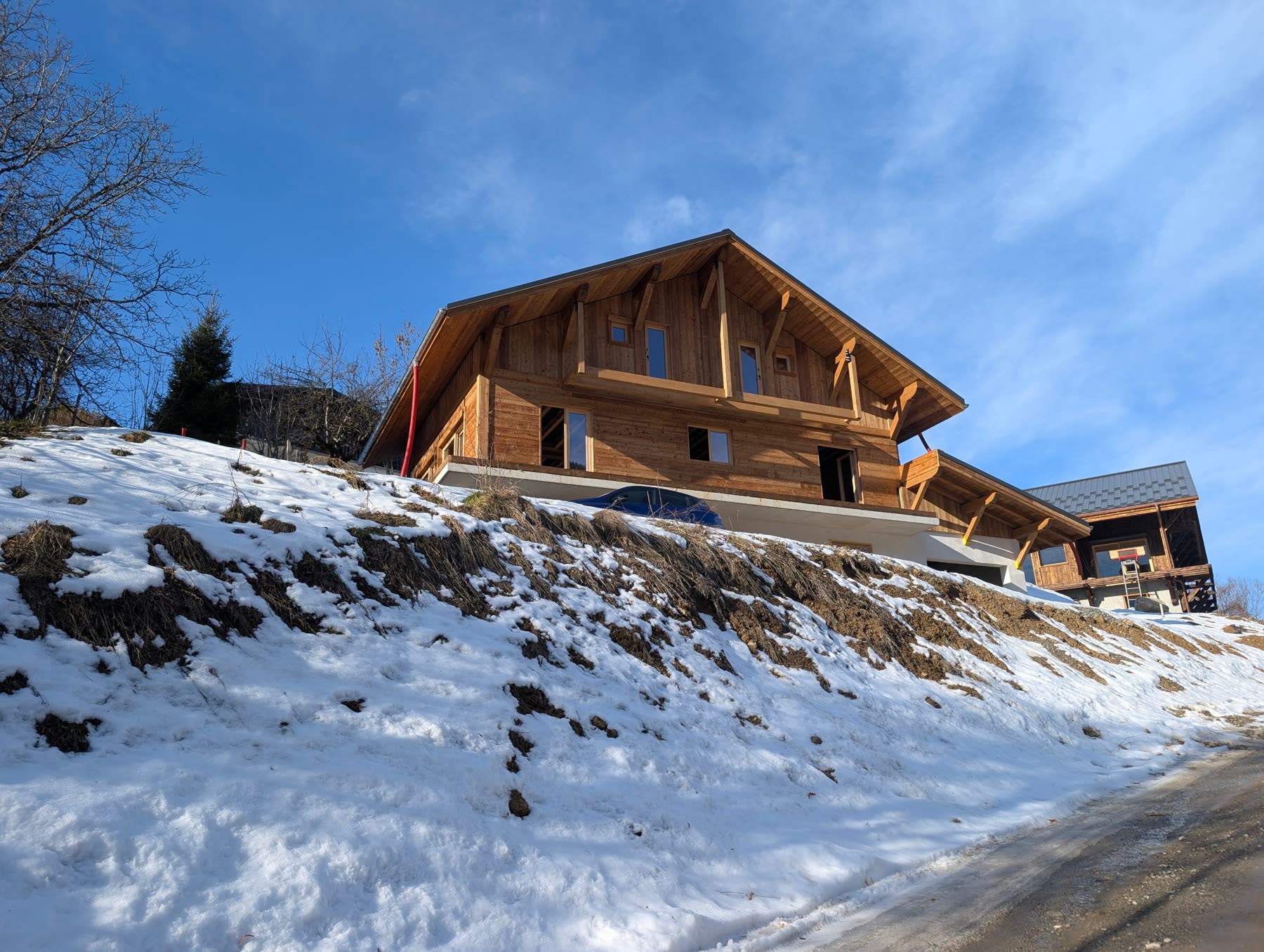
Buying the land
We’d found the plot. Then we found out how seriously the French take a signature.
By Marc 4 min read
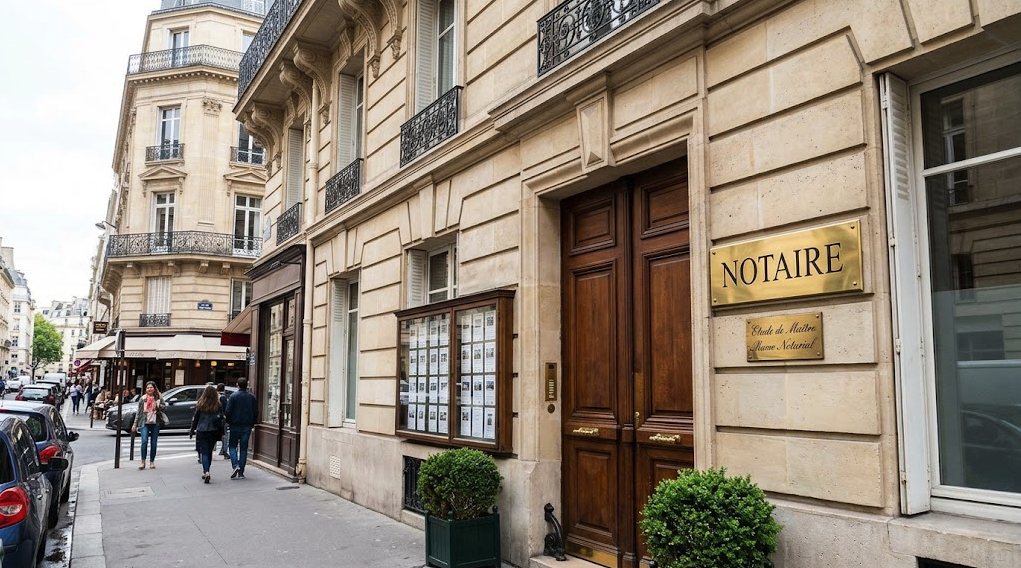
Buying land in France vs England
We’d found the plot. Now things were about to get serious.
In England, an accepted offer is little more than a polite intention. Either side can walk away, and gazumping is a national sport. In France, once you’ve signed, the seller is committed to you, and you’re very nearly committed to them. There’s no gazumping. So you’d better mean it.
A note before we start: this is our experience of buying a building plot, not legal or tax advice. Rules and rates change, so check everything with a notaire before you sign.
How a French purchase works
A French purchase usually runs in three steps.
- The offer (offre d’achat). Optional, and usually made through the estate agent. It sets out the price you’re proposing and any conditions, such as getting a mortgage or a particular planning permission.
- The preliminary contract. Most often a compromis de vente, where both sides commit. Sometimes it’s a promesse unilatérale de vente, where the seller is bound to sell and you have an option to buy. Either way you pay a deposit, typically 5–10% of the price, held by the notaire.
- The final deed (acte de vente). Usually about three months later, once the checks are done. You pay the balance and the fees, and it’s yours.
The deposit isn’t simply lost if things go wrong. The contract lists conditions suspensives (suspensive conditions): if one fails, the deal falls away and you get your money back. If you just change your mind, you’ll usually lose it.
The notaire
The notaire handles the legal side, acting as solicitor and conveyancer in one. Although you appoint them, a notaire is a public official who acts for the transaction, not for one side. Buyer and seller can share a notaire, or each have their own working together. We appointed Simon Attey from Alpine 3V Notaries, who speaks English and was very thorough.
The notaire does the due diligence: the searches, the planning documents, the paperwork. What there isn’t, unlike in the UK, is a survey culture. For an old house the logic, as someone put it to us, is “if it’s been standing for the past hundred years, it’s not going to fall down tomorrow”. A house survey wasn’t relevant to us anyway. We were buying a field with a hole in it.
Signing from England
We were in the UK when the acte de vente was signed, so we gave the notaire power of attorney to sign on our behalf. That’s common for overseas buyers and saved us a trip. The balance went to the notaire’s account by bank transfer, along with the fees.
No cooling-off on land
You may have read that French buyers get a ten-day cooling-off period (the délai de rétractation) after signing. That’s true for a house or an apartment. It isn’t true for a building plot.
Our contract said so in black and white: no right of withdrawal. On land, your homework has to be done before you sign, not in the ten days after.
What it cost to buy
The catch-all phrase is frais de notaire, notaire fees. The name is misleading: most of the money is tax, and the notaire keeps only a small slice. On a plot bought from a private seller, budget roughly 7–8% of the price. That’s the same rate you’d pay on an older chalet, but it’s a percentage of a much smaller number, which is one quiet advantage of buying land. (On a chalet, 7–8% is a sizeable sum.)
One pleasant surprise: the estate agent’s fee was the seller’s to pay, and already included in the price.
The checks that matter for land
The standard French diagnostic reports (asbestos, lead, termites, energy) are written with houses in mind. For a plot, these matter more:
- Soil study (étude de sol). What you’re building on. On a mountainside, this isn’t optional. We tell the story of ours in the groundworks chapter.
- Boundary survey (bornage). A surveyor pegs out exactly what you’re buying.
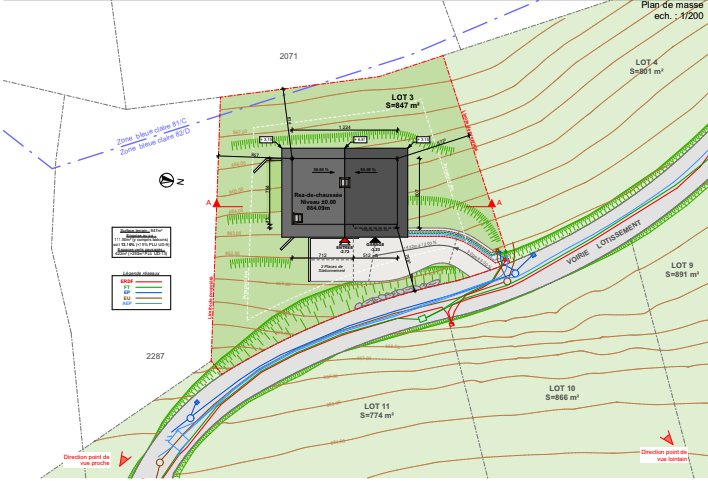
- Planning. What you’re allowed to build. Our plot came with a building permit already granted, which passed to us with the land.
- Services (viabilité). Water, electricity and drainage. Connecting them is the buyer’s cost, and “cleared land” isn’t the same as “serviced land”.
- Risk maps. The mairie’s plans for landslide, avalanche and flood risk, which can shape the foundations.
French landowners
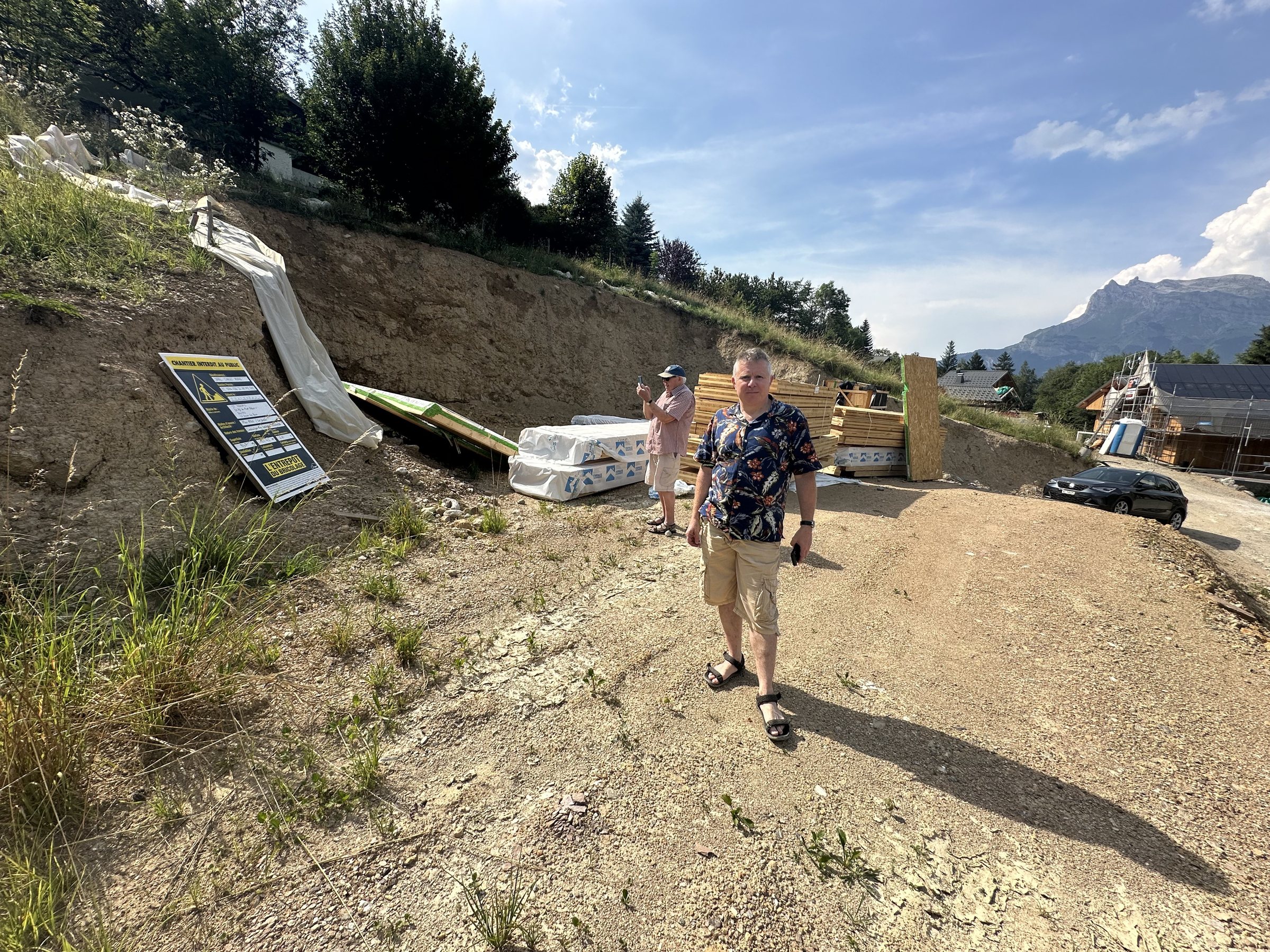
The notaire signed, the money moved, and with all that done we became French landowners. Of a field. With a hole in it. And a planning permission we already wanted to change.
A little context
Is a property offer legally binding in France?
Once the preliminary contract is signed, the seller is committed and there’s no gazumping. The buyer is protected by suspensive conditions, and for a home (not land) by a ten-day cooling-off period.
Is there a cooling-off period when buying land in France?
No. The ten-day cooling-off period applies to homes, not building plots, and our contract said so explicitly. Do your checks before you sign.
How much are notaire fees on a building plot in France?
Budget roughly 7–8% of the price on a plot from a private seller, most of it tax rather than the notaire’s own fee. Buying from a developer can change this, so check which tax regime the contract states.
Can the buyer and seller use the same notaire?
Yes, it’s common to share one. You can also each have your own, and the two notaires work on the sale together.
Do you need to be in France to sign the final deed?
No. We were in the UK and gave the notaire power of attorney to sign for us.