Concrete, timber or SIP? Why we built with insulated panels
Most chalets here are concrete boxes dressed in wood. We wanted ours to be warm all the way through.
By Marc 3 min read
What structure?
Walk past a chalet going up in our valley and there’s a good chance you’ll see a concrete box. A few months later it’s clad in timber, and you’d never know.
Chalets here get built one of three ways:
- Concrete. A concrete shell, clad in wood so it looks the part.
- Timber. A timber frame, insulated and then clad.
- SIP. Structural insulated panels, a more modern system, and the one we chose.
Why not concrete?
Concrete is the local default, and we didn’t want it. Cement carries a heavy carbon footprint, and for a place defined by its mountains and clean air, that didn’t feel right. Wrapping a concrete box in wood so it looks like a chalet felt the wrong way round.
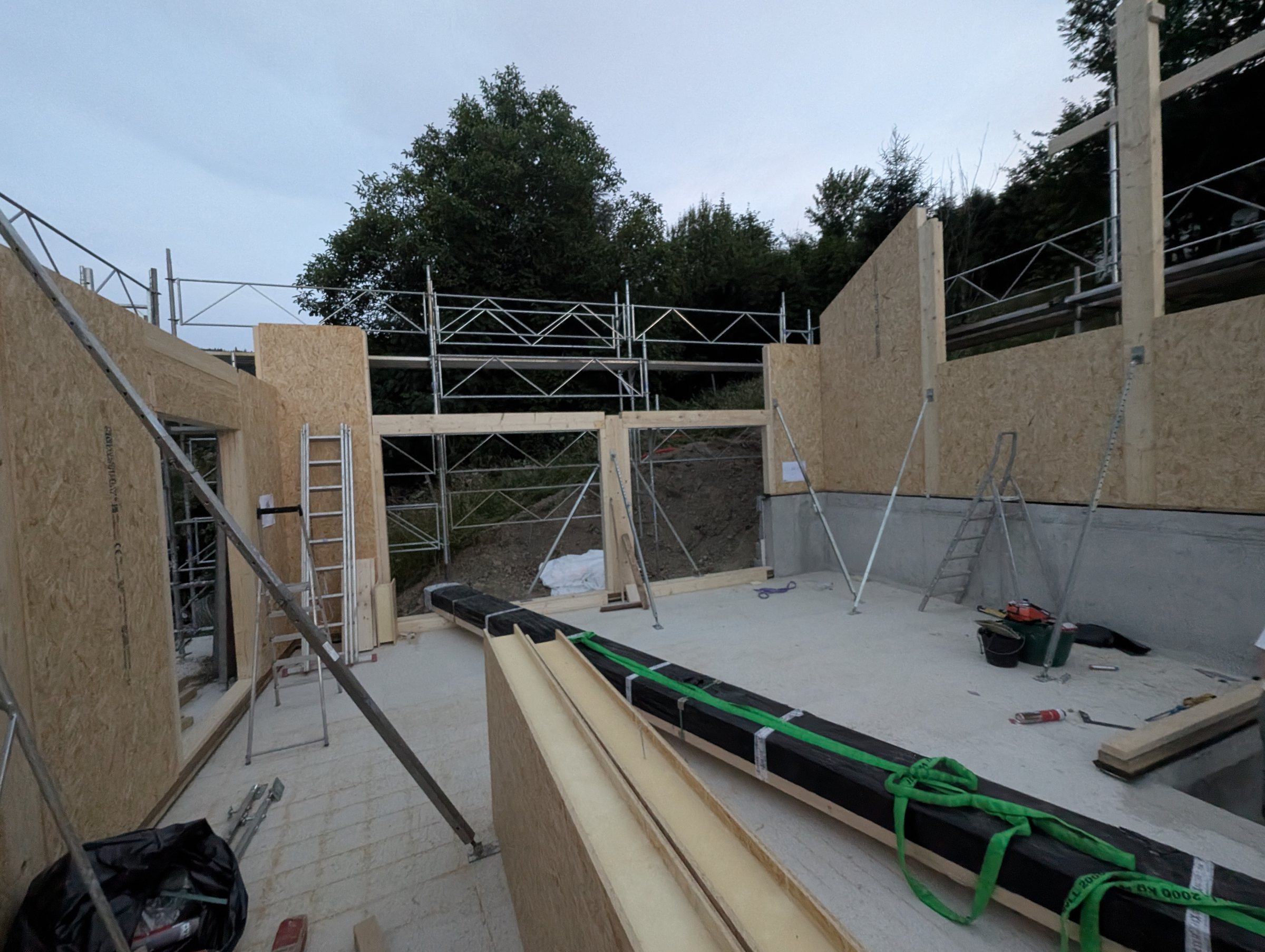
We weren’t purists about it. Where the chalet sits into the slope, the ground floor is concrete, because a wall holding back a hillside needs to be. Above that, we wanted something better.
And not plain timber?
Timber was our instinct, and we’d more or less settled on it. Then we came across SIP, and it quietly took over the conversation.
What SIP is, and why it suits the mountains
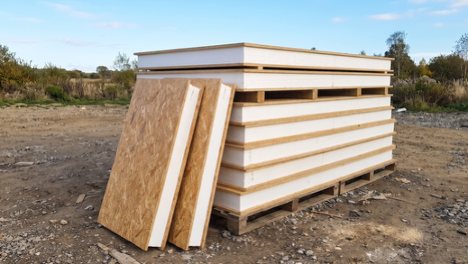
SIP stands for structural insulated panels: a thick core of rigid insulation bonded between two structural boards. The panels are made in a factory, cut to the plans, and assembled on site like a very large, very precise kit.
For a chalet at altitude, the advantages stack up:
- Warmth. The insulation is part of the structure, not stuffed in afterwards, so there are very few cold spots and the building can be made extremely airtight. In an Alpine winter, that’s the whole game.
- Lower running costs. A warm, airtight shell needs far less heating. That matters for us, and for anyone who’s seen the energy ratings on older chalets.
- More room inside. The walls are thinner than concrete or conventionally insulated timber for the same performance, so you gain usable space within the same footprint.
- Speed. Panels arrive ready to go up, which means less time with an open building exposed to mountain weather.
- Precision. Factory-made panels go together with tight tolerances, and the quality is consistent.
- Less material. SIP uses less raw material than a concrete build, which was a big part of why we liked it.
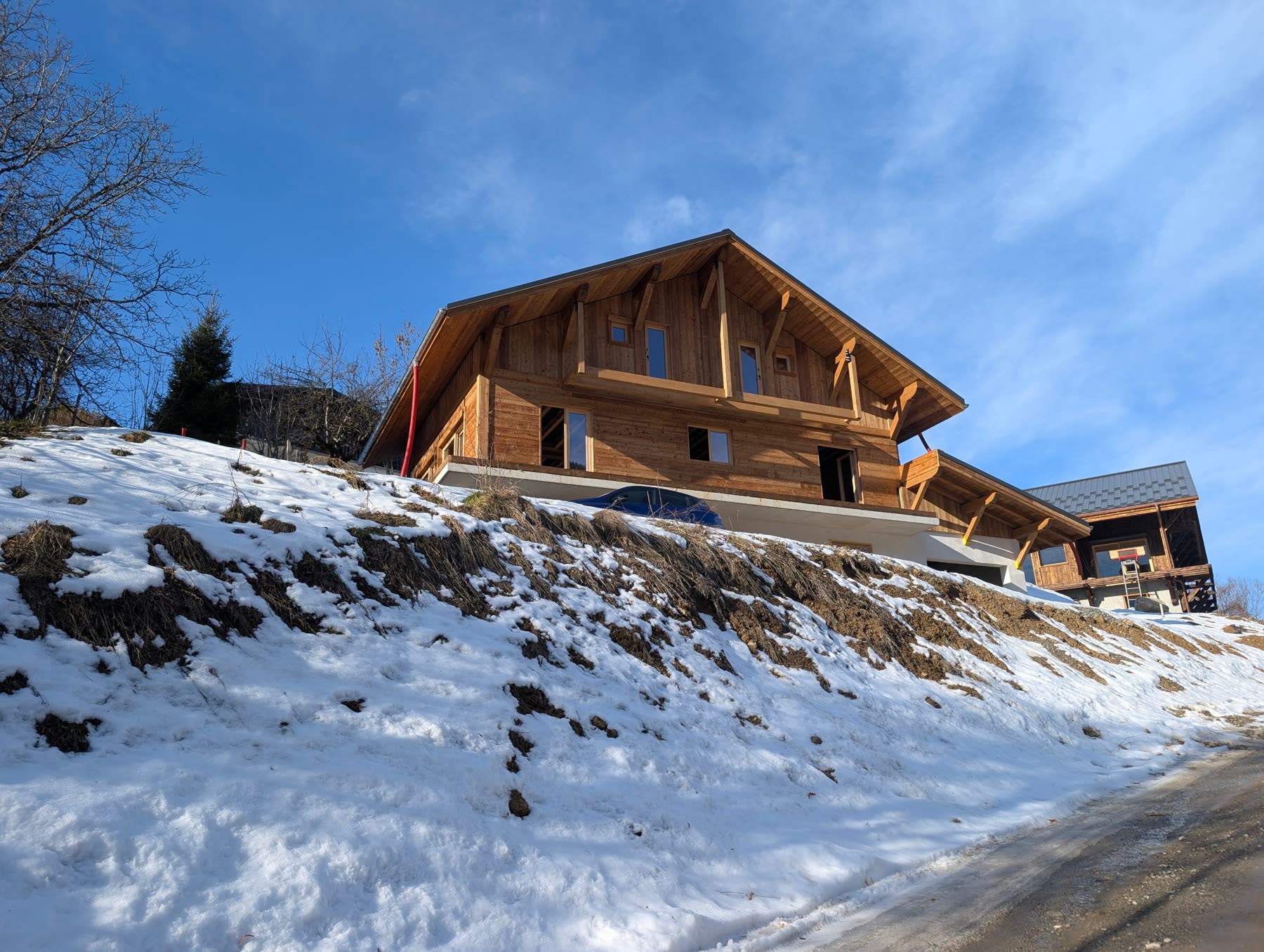
From the lane it’s every inch a Saint-Gervais chalet, exactly as the mairie requires. Behind the timber cladding it performs far better than a traditional build.
Choosing the supplier: Clix and Kingspan TEK
There are a few SIP suppliers to choose from. We went with Clix, the French delivery partner for the Kingspan TEK building system. The panels are made in a factory in the UK before coming out to site.
Tom Wood, Clix’s MD, is English, and he was brilliant: a first-class team with a first-class product. It helped that the system comes properly backed, with the standard décennale (ten-year) insurance and a 20 year Kingspan warranty, and that Clix install it themselves rather than subcontracting.
What that meant for the project
Choosing SIP rather than one turnkey builder had a knock-on effect. Someone had to coordinate everything around the panels: the groundworks and concrete first, then the SIP shell and the roof. So we brought in a project manager. More on that in the next chapter.
And when the panels finally went up, it was fast: the whole shell in under two weeks. We tell that story in its own chapter.
A little context
What is SIP construction?
SIP stands for structural insulated panels: a rigid insulation core bonded between two structural boards, made in a factory and assembled on site. Because the insulation is part of the structure, SIP buildings are very airtight and energy-efficient.
Is SIP a good choice for a ski chalet?
Yes. SIP walls are warm and draught-free, which suits a cold Alpine climate, and they’re thinner than concrete for the same performance. We used concrete only where the chalet sits into the slope.
What are the main ways to build a chalet in the Alps?
Concrete, timber frame or SIP. Concrete is durable but carbon-heavy and usually clad in timber to look right. Timber is traditional. SIP gives the best insulation and the fastest build.
How long does a SIP chalet take to build?
The panel shell itself is quick: ours went up in under two weeks. The whole build is much longer once you add groundworks, foundations, the roof and the fit-out.